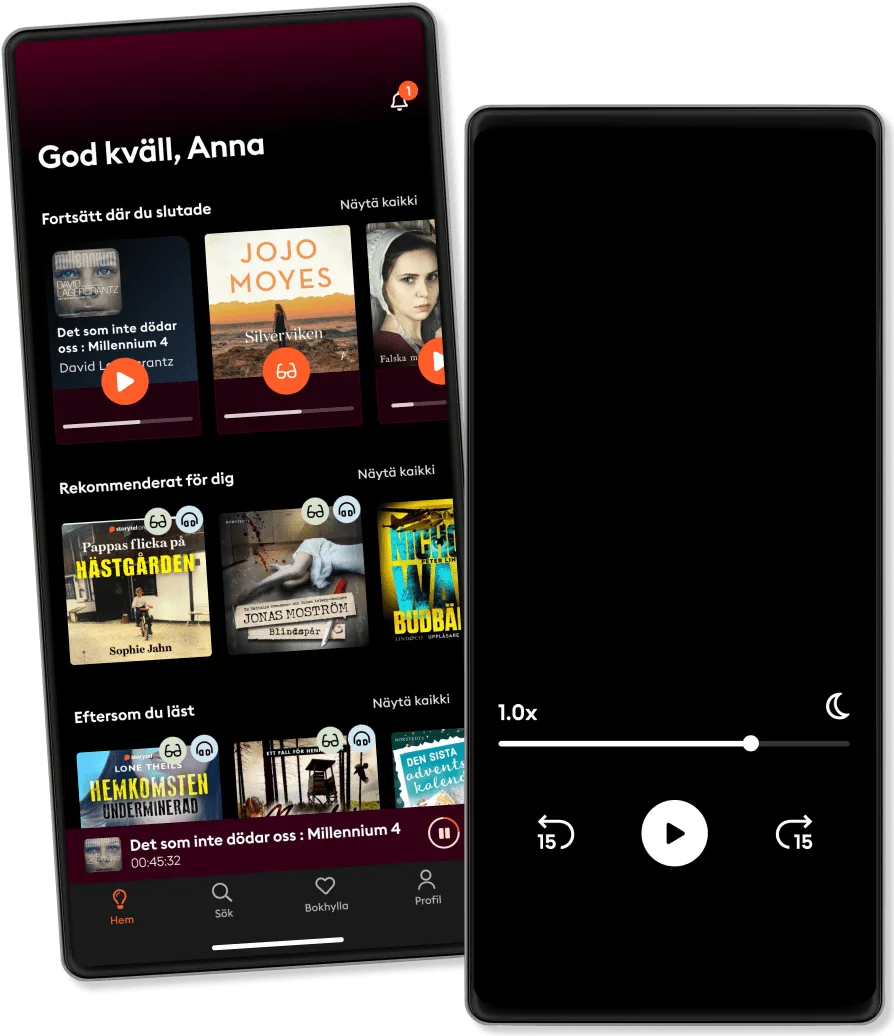
Listen and read

Step into an infinite world of stories

  • Read and listen as much as you want
  • Over 1 million titles
  • Exclusive titles + Storytel Originals
  • 7 days free trial, then €9.99/month
  • Easy to cancel anytime
Subscribe Now
Details page - Device banner - 894x1036
Cover for Why Don't Students Like School?: A Cognitive Scientist Answers Questions About How the Mind Works and What It Means for the Classroom

Why Don't Students Like School?: A Cognitive Scientist Answers Questions About How the Mind Works and What It Means for the Classroom

28 Ratings

4.1

Duration
6H 51min
Language
English
Format
Category

Non-fiction

Kids are naturally curious, but when it comes to school it seems like their minds are turned off. Why is it that they can remember the smallest details from their favorite television programs, yet miss the most obvious questions on their history test?

Cognitive scientist Dan Willingham has focused his acclaimed research on the biological and cognitive basis of learning and has a deep understanding of the daily challenges faced by classroom teachers. This book will help teachers improve their practice by explaining how they and their students think and learn—revealing the importance of story, emotion, memory, context, and routine in building knowledge and creating lasting learning experiences.

In this breakthrough book, Willingham has distilled his knowledge of cognitive science into a set of nine principles that are easy to understand and have clear applications for the classroom. Some examples of his surprising findings are:

—"Learning styles" don't exist. The processes by which different children think and learn are more similar than different.

—Intelligence is malleable. Intelligence contributes to school performance and children do differ, but intelligence can be increased through sustained hard work.

—You cannot develop "thinking skills" in the absence of facts. We encourage students to think critically, not just memorize facts. However, thinking skills depend on factual knowledge for their operation.

Why Don't Students Like School is a basic primer for every teacher who wants to know how their brains and their students' brains work and how that knowledge can help them hone their teaching skills.

© 2011 Tantor Media (Audiobook): 9781452674193

Release date

Audiobook: September 20, 2011

Others also enjoyed ...

  1. Epic Measures: One Doctor. Seven Billion Patients.
    Epic Measures: One Doctor. Seven Billion Patients. Jeremy N. Smith
  2. Deep Medicine: How Artificial Intelligence Can Make Healthcare Human Again
    Deep Medicine: How Artificial Intelligence Can Make Healthcare Human Again Eric Topol
  3. How Charts Lie: Getting Smarter about Visual Information
    How Charts Lie: Getting Smarter about Visual Information Alberto Cairo
  4. The Tyranny of Metrics
    The Tyranny of Metrics Jerry Z. Muller
  5. The Age of AI: Artificial Intelligence and the Future of Humanity
    The Age of AI: Artificial Intelligence and the Future of Humanity Jason Thacker
  6. Standard Deviations: Flawed Assumptions, Tortured Data, and Other Ways to Lie with Statistics
    Standard Deviations: Flawed Assumptions, Tortured Data, and Other Ways to Lie with Statistics Gary Smith
  7. Messy: How to Be Creative and Resilient in a Tidy-Minded World
    Messy: How to Be Creative and Resilient in a Tidy-Minded World Tim Harford
  8. The Silo Effect: The Peril of Expertise and the Promise of Breaking Down Barriers
    The Silo Effect: The Peril of Expertise and the Promise of Breaking Down Barriers Gillian Tett
  9. More From Less: How We Learned to Create More Without Using More
    More From Less: How We Learned to Create More Without Using More Andrew McAfee
  10. Why Don't Students Like School?: A Cognitive Scientist Answers Questions About How the Mind Works and What It Means for the Classroom, 2nd Edition
    Why Don't Students Like School?: A Cognitive Scientist Answers Questions About How the Mind Works and What It Means for the Classroom, 2nd Edition Daniel T. Willingham
  11. The Darwin Economy: Liberty, Competition, and the Common Good
    The Darwin Economy: Liberty, Competition, and the Common Good Robert H. Frank
  12. Spark: The Life of Electricity and the Electricity of Life
    Spark: The Life of Electricity and the Electricity of Life Timothy J. Jorgensen
  13. Humans Need Not Apply: A Guide to Wealth and Work in the Age of Artificial Intelligence
    Humans Need Not Apply: A Guide to Wealth and Work in the Age of Artificial Intelligence Jerry Kaplan
  14. The Complacent Class: The Self-Defeating Quest for the American Dream
    The Complacent Class: The Self-Defeating Quest for the American Dream Tyler Cowen
  15. Work Hard. Be Nice.: How Two Inspired Teachers Created the Most Promising Schools in America
    Work Hard. Be Nice.: How Two Inspired Teachers Created the Most Promising Schools in America Jay Mathews
  16. The Perfect Bet: How Science and Math Are Taking the Luck Out of Gambling
    The Perfect Bet: How Science and Math Are Taking the Luck Out of Gambling Adam Kucharski
  17. The Formula: How Algorithms Solve all our Problems... and Create More
    The Formula: How Algorithms Solve all our Problems... and Create More Luke Dormehl
  18. The Invisible Gorilla: And Other Ways Our Intuition Deceives Us
    The Invisible Gorilla: And Other Ways Our Intuition Deceives Us Christopher Chabris
  19. The Importance of Being Interested: Adventures in Scientific Curiosity
    The Importance of Being Interested: Adventures in Scientific Curiosity Robin Ince
  20. Future Histories: What Ada Lovelace, Tom Paine, and the Paris Commune Can Teach Us About Digital Technology
    Future Histories: What Ada Lovelace, Tom Paine, and the Paris Commune Can Teach Us About Digital Technology Lizzie O'Shea
  21. Infinite Powers: How Calculus Reveals the Secrets of the Universe
    Infinite Powers: How Calculus Reveals the Secrets of the Universe Steven Strogatz
  22. The Misinformation Age: How False Beliefs Spread
    The Misinformation Age: How False Beliefs Spread Cailin O’Connor
  23. The Theory That Would Not Die: How Bayes' Rule Cracked the Enigma Code, Hunted Down Russian Submarines, and Emerged Triumphant from Two Centuries of Controversy
    The Theory That Would Not Die: How Bayes' Rule Cracked the Enigma Code, Hunted Down Russian Submarines, and Emerged Triumphant from Two Centuries of Controversy Sharon Bertsch McGrayne
  24. High Price: A Neuroscientist's Journey of Self-Discovery That Challenges Everything You Know About Drugs and Society
    High Price: A Neuroscientist's Journey of Self-Discovery That Challenges Everything You Know About Drugs and Society Carl Hart
  25. Move Fast and Break Things: How Facebook, Google, and Amazon Have Cornered Culture and What It Means For All Of Us
    Move Fast and Break Things: How Facebook, Google, and Amazon Have Cornered Culture and What It Means For All Of Us Jonathan Taplin
  26. An Elegant Defense: The Extraordinary New Science of the Immune System: A Tale in Four Lives
    An Elegant Defense: The Extraordinary New Science of the Immune System: A Tale in Four Lives Matt Richtel
  27. How Minds Change: The New Science of Belief, Opinion and Persuasion
    How Minds Change: The New Science of Belief, Opinion and Persuasion David McRaney

This is why you’ll love Storytel

  • Listen and read without limits

  • 800 000+ stories in 40 languages

  • Kids Mode (child-safe environment)

  • Cancel anytime

Unlimited stories, anytime

Unlimited

Listen and read as much as you want

9.99 € /month

7 days free
  • Offline Mode

  • Kids Mode

  • Cancel anytime

Try now

