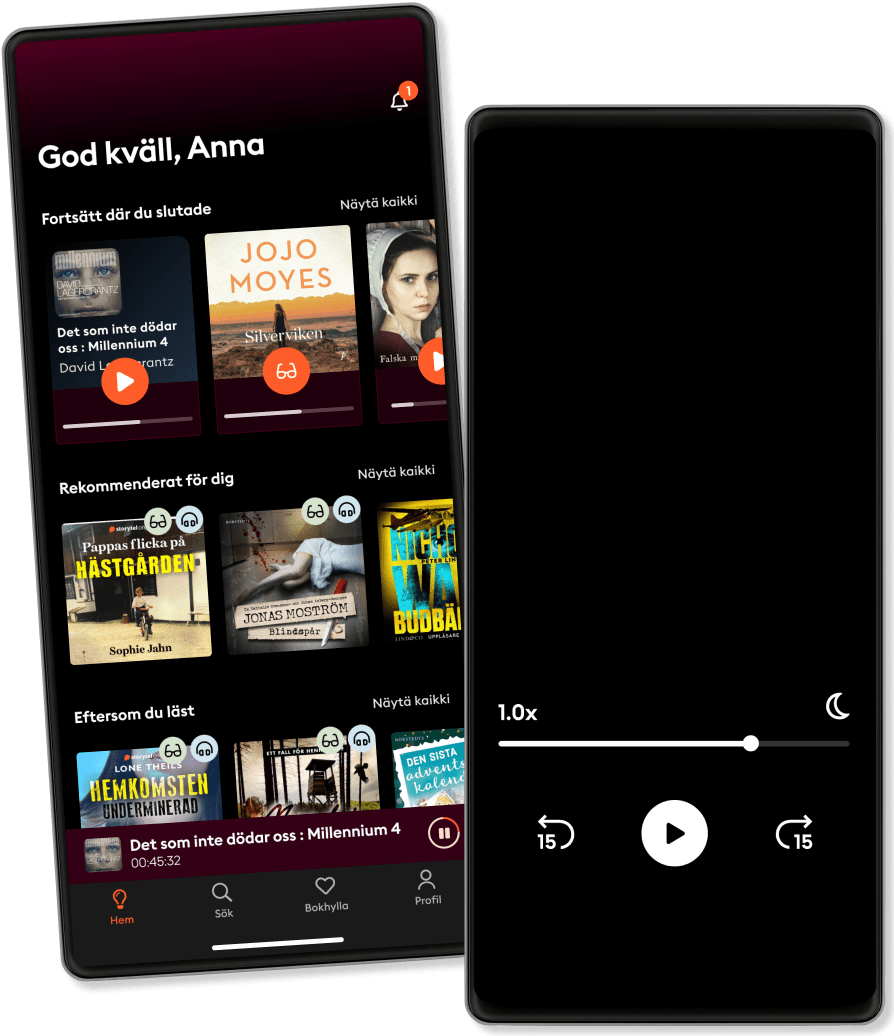
Écouter et lire

Entrez dans un monde infini d'histoires

  • Lire et écouter autant que vous le voulez
  • Plus d'un million de titres
  • Titres exclusifs + créations originales Storytel
  • 14 jours d'essai gratuit, puis 9,99 € par mois
  • Annulation facile à tout moment
Essayer gratuitement
Details page - Device banner - 894x1036
Cover for Once Upon an Algorithm: How Stories Explain Computing

Once Upon an Algorithm: How Stories Explain Computing

17 évaluations

3.3

Durée
10h 48min
Langue
Anglais
Format
Catégorie

Documents et essais

How Hansel and Gretel, Sherlock Holmes, the movie Groundhog Day, Harry Potter, and other familiar stories illustrate the concepts of computing.

Picture a computer scientist, staring at a screen and clicking away frantically on a keyboard, hacking into a system, or perhaps developing an app. Now delete that picture. In Once Upon an Algorithm, Martin Erwig explains computation as something that takes place beyond electronic computers, and computer science as the study of systematic problem solving. Erwig points out that many daily activities involve problem solving. Getting up in the morning, for example: You get up, take a shower, get dressed, eat breakfast. This simple daily routine solves a recurring problem through a series of well-defined steps. In computer science, such a routine is called an algorithm.

Erwig illustrates a series of concepts in computing with examples from daily life and familiar stories. Hansel and Gretel, for example, execute an algorithm to get home from the forest. The movie Groundhog Day illustrates the problem of unsolvability; Sherlock Holmes manipulates data structures when solving a crime; the magic in Harry Potter's world is understood through types and abstraction; and Indiana Jones demonstrates the complexity of searching. Along the way, Erwig also discusses representations and different ways to organize data; "intractable" problems; language, syntax, and ambiguity; control structures, loops, and the halting problem; different forms of recursion; and rules for finding errors in algorithms.

This engaging book explains computation accessibly and shows its relevance to daily life. Something to think about next time we execute the algorithm of getting up in the morning.

© 2018 Tantor Media (Livre audio): 9781977383549

Date de publication

Livre audio : 12 juin 2018

Mots-clés

    D'autres ont également apprécié ...

    1. Computational Thinking
      Computational Thinking Peter J. Denning
    2. The Formula: How Algorithms Solve all our Problems... and Create More
      The Formula: How Algorithms Solve all our Problems... and Create More Luke Dormehl
    3. Humans Need Not Apply: A Guide to Wealth and Work in the Age of Artificial Intelligence
      Humans Need Not Apply: A Guide to Wealth and Work in the Age of Artificial Intelligence Jerry Kaplan
    4. Standard Deviations: Flawed Assumptions, Tortured Data, and Other Ways to Lie with Statistics
      Standard Deviations: Flawed Assumptions, Tortured Data, and Other Ways to Lie with Statistics Gary Smith
    5. What to Think About Machines That Think: Today's Leading Thinkers on the Age of Machine Intelligence
      What to Think About Machines That Think: Today's Leading Thinkers on the Age of Machine Intelligence John Brockman
    6. What the Luck?: The Surprising Role of Chance in Our Everyday Lives
      What the Luck?: The Surprising Role of Chance in Our Everyday Lives Gary Smith
    7. The Age of AI: Artificial Intelligence and the Future of Humanity
      The Age of AI: Artificial Intelligence and the Future of Humanity Jason Thacker
    8. Infinite Powers: How Calculus Reveals the Secrets of the Universe
      Infinite Powers: How Calculus Reveals the Secrets of the Universe Steven Strogatz
    9. Game Theory: Understanding the Mathematics of Life
      Game Theory: Understanding the Mathematics of Life Brian Clegg
    10. Big Data: How the Information Revolution Is Transforming Our Lives
      Big Data: How the Information Revolution Is Transforming Our Lives Brian Clegg
    11. The Clock Mirage: Our Myth of Measured Time
      The Clock Mirage: Our Myth of Measured Time Joseph Mazur
    12. The Misinformation Age: How False Beliefs Spread
      The Misinformation Age: How False Beliefs Spread Cailin O’Connor
    13. Mastering Logical Fallacies: The Definitive Guide to Flawless Rhetoric and Bulletproof Logic
      Mastering Logical Fallacies: The Definitive Guide to Flawless Rhetoric and Bulletproof Logic Michael Withey
    14. On Freedom
      On Freedom Cass R. Sunstein
    15. Future Histories: What Ada Lovelace, Tom Paine, and the Paris Commune Can Teach Us About Digital Technology
      Future Histories: What Ada Lovelace, Tom Paine, and the Paris Commune Can Teach Us About Digital Technology Lizzie O'Shea
    16. The Joy of X: A Guided Tour of Math, from One to Infinity
      The Joy of X: A Guided Tour of Math, from One to Infinity Steven Strogatz
    17. Spark: The Life of Electricity and the Electricity of Life
      Spark: The Life of Electricity and the Electricity of Life Timothy J. Jorgensen
    18. The Darwin Economy: Liberty, Competition, and the Common Good
      The Darwin Economy: Liberty, Competition, and the Common Good Robert H. Frank
    19. Big Mind: How Collective Intelligence Can Change Our World
      Big Mind: How Collective Intelligence Can Change Our World Geoff Mulgan
    20. Artificial Intelligence: Modern Magic or Dangerous Future?
      Artificial Intelligence: Modern Magic or Dangerous Future? Yorick Wilks
    21. The History of the Future: Oculus, Facebook, and the Revolution That Swept Virtual Reality
      The History of the Future: Oculus, Facebook, and the Revolution That Swept Virtual Reality Blake J. Harris
    22. Radical Technologies: The Design of Everyday Life
      Radical Technologies: The Design of Everyday Life Adam Greenfield
    23. Age of Invisible Machines: A Practical Guide to Creating a Hyperautomated Ecosystem of Intelligent Digital Workers
      Age of Invisible Machines: A Practical Guide to Creating a Hyperautomated Ecosystem of Intelligent Digital Workers Robb Wilson
    24. The Theory That Would Not Die: How Bayes' Rule Cracked the Enigma Code, Hunted Down Russian Submarines, and Emerged Triumphant from Two Centuries of Controversy
      The Theory That Would Not Die: How Bayes' Rule Cracked the Enigma Code, Hunted Down Russian Submarines, and Emerged Triumphant from Two Centuries of Controversy Sharon Bertsch McGrayne
    25. Deep Medicine: How Artificial Intelligence Can Make Healthcare Human Again
      Deep Medicine: How Artificial Intelligence Can Make Healthcare Human Again Eric Topol
    26. The Elements of Eloquence: Secrets of the Perfect Turn of Phrase
      The Elements of Eloquence: Secrets of the Perfect Turn of Phrase Mark Forsyth
    27. Calculating the Cosmos: How Mathematics Unveils the Universe
      Calculating the Cosmos: How Mathematics Unveils the Universe Ian Stewart
    28. The All New Don't Think of an Elephant!: Know Your Values and Frame the Debate
      The All New Don't Think of an Elephant!: Know Your Values and Frame the Debate George Lakoff
    29. Artificial Intelligence: From Medieval Robots to Neural Networks
      Artificial Intelligence: From Medieval Robots to Neural Networks Clifford A. Pickover
    30. Our Senses: An Immersive Experience
      Our Senses: An Immersive Experience Rob DeSalle

    L’offre Storytel :

    • Accès à la bibliothèque complète

    • Mode enfant

    • Annulez à tout moment

    15 heures

    Pour accompagner vos loisirs

    9.99 € /mois

    Essayer maintenant

    30 heures

    Pour vos trajets quotidiens

    14.99 € /mois

    Essayer maintenant

    45 heures

    Pour écouter tous les jours

    17.99 € /mois

    Essayer maintenant